
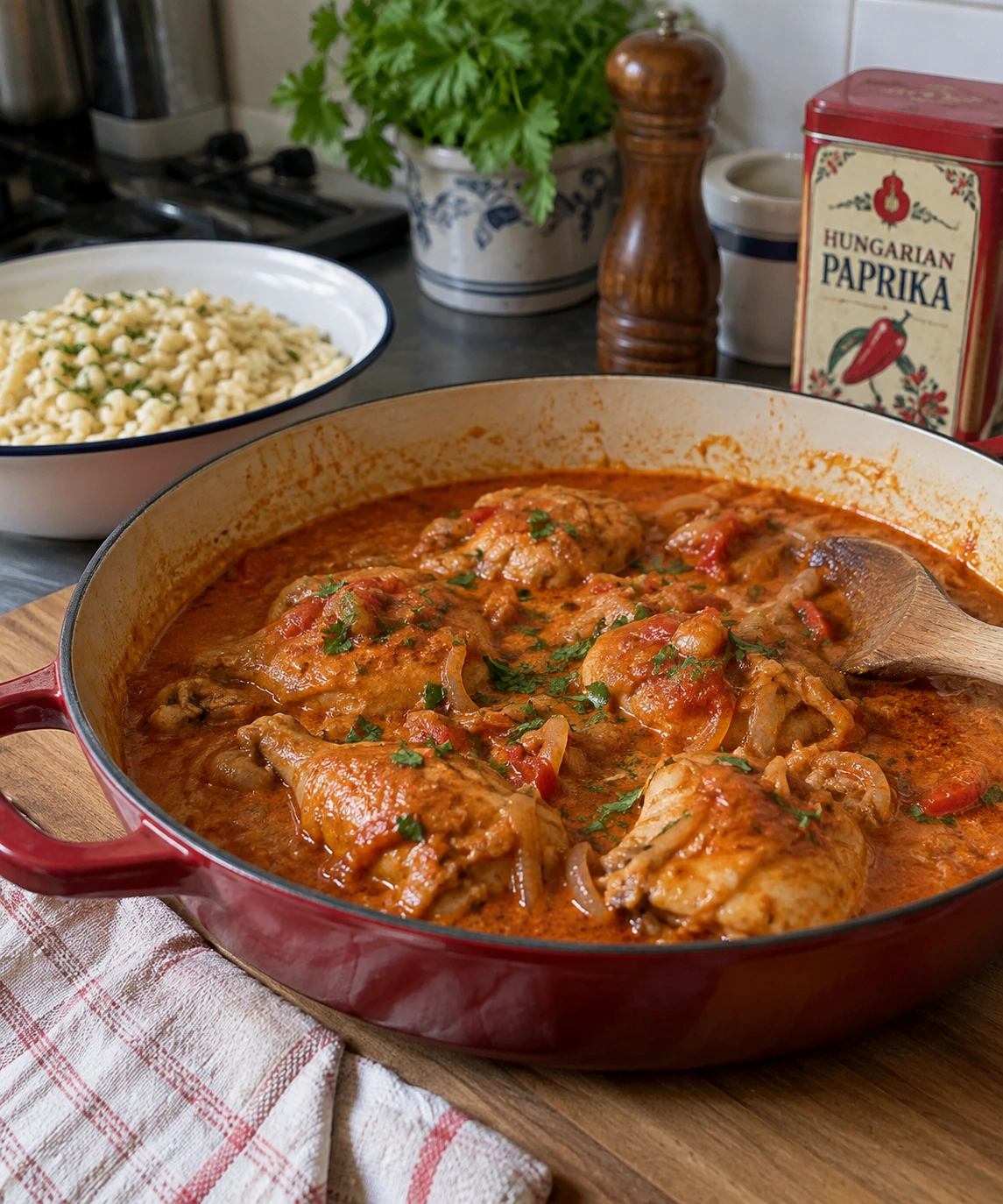
Paprikash: Hungary’s Red-Hot Comfort Food
There are spices that arrive quietly. A little pinch disappears into a sauce and you barely notice where it came from. Then there is Hungarian paprika. It walks into the kitchen wearing a deep red coat and immediately demands attention.
But here is the surprise: paprika does not necessarily mean heat. In Hungary, paprika is much more than a way to make food spicy. Made from dried Capsicum peppers that are ground into a fine powder, it can be sweet, mild or hot, depending on the variety. In dishes such as chicken paprikash, or csirkepaprikás, the paprika brings its unmistakable colour and a rich peppery depth without turning dinner into a challenge for your taste buds.
And that is what makes paprikash so good. It looks fiery. It tastes warm and savoury. Yet the heat can remain surprisingly gentle.
A Little Paprika Goes a Long Way
The magic begins with onions. Slowly cooked until soft, they create the sweet base of the dish. Then comes the paprika. This is the moment to pay attention because Hungarian cooks know that paprika is not something you simply throw into a scorching pan and forget about.
Paprika can burn quickly, turning bitter. Instead, it is traditionally added after the onions and away from fierce heat, often with a little liquid following soon after. The powder dissolves into the sauce, releasing its colour and flavour.
Then comes the chicken. As it cooks, the paprika-infused sauce clings to the meat, becoming deeper and richer. A little tomato or pepper can join the party, depending on the recipe, while chicken stock or water keeps everything moving towards a generous, spoonable sauce.
And then there is the finishing touch: sour cream. Stirred into the sauce, it softens the paprika and gives the dish its characteristic creamy richness. Suddenly that intense red colour is wrapped in a silky sauce that feels made for a cold evening, a hungry table and a piece of bread waiting to mop up every last drop.
Paprikash Is Not About Chasing Heat
That is perhaps the biggest misunderstanding about paprika. Because it comes from Capsicum peppers, it is easy to assume that paprika is simply chilli powder with a different name. It is not. Hungarian paprika comes in different varieties with very different levels of heat and flavour.
For a classic chicken paprikash, a sweet Hungarian paprika such as Édesnemes is a natural choice. It provides the vivid red colour associated with the dish while keeping the flavour rounded and approachable.
If you want more heat, you can introduce a hotter paprika separately. That way, you control the fire rather than allowing it to take over the entire dish. The result should still taste like paprika first.
Hungarian Chicken Paprikash
Serves 4
Ingredients
- 1 kg chicken thighs, bone-in and skinless
- 2 tbsp Hungarian sweet paprika, preferably Édesnemes
- 2 large onions, finely chopped
- 2 cloves garlic, finely chopped
- 1 green pepper, chopped
- 1 medium tomato, chopped
- 500 ml chicken stock
- 200 g sour cream
- 1 tbsp plain flour
- 2 tbsp vegetable oil or lard
- 1 tsp salt
- ½ tsp black pepper
Method
- Heat the oil or lard in a large heavy-based pan over medium heat. Season the chicken with salt and pepper, then brown the pieces lightly on both sides. Remove them from the pan and set aside.
- Add the onions to the same pan. Cook gently for around 8–10 minutes until soft and translucent. Add the garlic, green pepper and tomato and cook for another 3–4 minutes.
- Now take the pan briefly off the heat.
- Add the paprika and stir it through the onions and vegetables. Do not let the dry paprika sit over high heat as it can burn and become bitter.
- Return the pan to a low heat and immediately add a splash of chicken stock, stirring well to create a smooth red base.
- Put the chicken back into the pan and pour in the remaining stock. Bring everything gently to a simmer, cover and cook for around 35–40 minutes, or until the chicken is tender and cooked through.
- In a small bowl, mix the sour cream with the flour until smooth. Take a little of the hot sauce from the pan and stir it gradually into the sour cream. This gently brings the temperature up and helps prevent the sour cream from splitting.
- Lower the heat and stir the sour cream mixture into the paprikash. Simmer very gently for another 5 minutes. Do not boil aggressively.
- Taste and adjust the seasoning.
- Serve hot with nokedli, Hungarian-style dumplings, or simply with rice or potatoes. And keep some good bread nearby. You will probably need it.
The Colour Tells Only Half the Story
A good paprikash arrives at the table looking almost impossibly red. But colour alone does not tell you what is happening inside the sauce. The best part is the balance. Sweet paprika brings warmth and depth. Onion adds sweetness. Chicken provides savoury richness. Sour cream cuts through it all with a cool, tangy finish. There is no need to make the dish brutally hot.
In fact, turning up the chilli too far can hide what makes paprikash special in the first place. This is a dish built around paprika's flavour, not a competition to see who can handle the most heat. And perhaps that is why it works so well as a Hungarian classic. It takes a humble dried pepper, grinds it into a brilliant red powder and turns it into something far bigger than a seasoning. A little flour, some onions, chicken and sour cream. Nothing extravagant. Yet put it all together and Hungary suddenly tastes very close.
A Final Spoonful
Paprikash is the kind of food that makes you understand why certain dishes survive for generations. It does not need complicated ingredients or elaborate technique. Its character comes from knowing when to slow down, when to add the paprika and, most importantly, when not to turn up the heat.
That red powder may look aggressive. Give it time, however, and it becomes something much softer: a rich, comforting sauce wrapped around tender chicken, with enough paprika on the spoon to remind you exactly where you are. Hungary, in one very satisfying bowl.
Hanan: text17 September 2026
You Might Like This
Loved this one? We picked a few more you might like.


Your voice!