
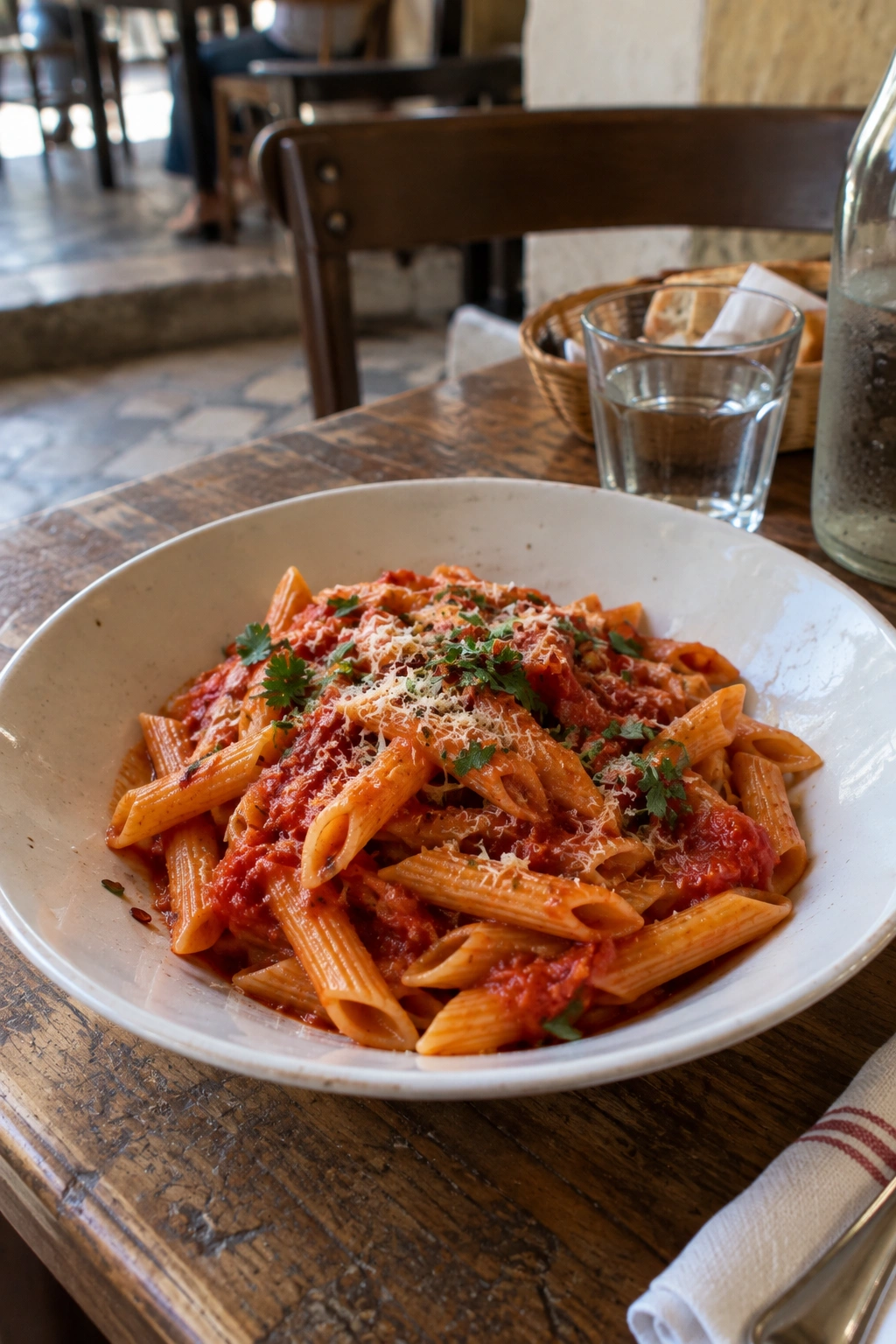
Roman Arrabbiata: A Simple Pasta Sauce with Heat
Few pasta sauces prove that you do not need a long ingredient list to make an impression. Arrabbiata, or sugo all’arrabbiata, comes from Rome and brings together tomatoes, garlic, olive oil and dried chilli for a sauce with a warm, persistent kick.
The name comes from the Italian word arrabbiato, meaning “angry”, a reference to the heat of the chilli. Unlike sauces that rely on a huge amount of fresh chilli, Arrabbiata gets much of its character from dried red chilli flakes, traditionally peperoncino. The chilli is gently cooked in olive oil, allowing its heat to spread through the sauce rather than sitting in isolated bursts.
It is traditionally served with penne, whose ridges and hollow centre hold onto the tomato sauce beautifully. The result is simple, comforting and properly spicy.
What Makes Arrabbiata Different?
The secret is not simply adding chilli to tomato sauce. Timing matters.
Garlic and dried chilli are gently warmed in olive oil before the tomatoes are added. This allows the oil to become infused with their flavour. The tomatoes then soften the intensity of the chilli while creating the rich base that makes Arrabbiata so satisfying.
The chilli should be noticeable, but it should not completely overpower the tomatoes. A good Arrabbiata has balance: acidity from the tomatoes, richness from the olive oil, savoury depth from the garlic and a lingering warmth from the chilli.
How to Make Arrabbiata Sauce
Serves: 2
Preparation: 10 minutes
Cooking: 20 minutes
Total: 30 minutes
Ingredients
- 200 g penne
- 400 g canned peeled tomatoes
- 2 garlic cloves
- 2 tbsp extra virgin olive oil
- 1 tsp dried red chilli flakes, or more to taste
- ½ tsp salt
- A small handful of fresh flat-leaf parsley
- 20–30 g grated Pecorino Romano, optional
Preparation
1. Prepare the garlic and chilli
- Peel the garlic and slice it thinly. Heat the olive oil in a large frying pan over a low to medium heat.
- Add the garlic and dried chilli flakes. Cook gently for about 1–2 minutes, stirring regularly. The garlic should become fragrant without turning dark.
- This is where the character of the sauce starts to build. The warm oil absorbs the chilli and garlic, creating a flavour base that will carry through the whole dish.
2. Add the tomatoes
- Crush the canned tomatoes with your hands or the back of a wooden spoon and add them to the pan.
- Season with salt and stir everything together.
- Bring the sauce to a gentle simmer, then reduce the heat. Let it cook for around 15–20 minutes, stirring occasionally.
- As the sauce reduces, the tomatoes become thicker and their natural sweetness balances the heat of the chilli.
3. Cook the pasta
- While the sauce is cooking, bring a large pan of salted water to the boil.
- Add the penne and cook according to the packet instructions until al dente. Before draining, reserve around 100 ml of the pasta cooking water.
- That starchy water can help loosen the sauce and allows it to cling more closely to the pasta.
4. Bring everything together
- Drain the pasta and add it directly to the Arrabbiata sauce.
- Toss over a low heat for 1–2 minutes. If the sauce feels too thick, add a small splash of the reserved pasta water and continue tossing.
- Taste and adjust the seasoning. If you want more heat, add another pinch of chilli flakes.
5. Finish the dish
- Divide the pasta between two plates and scatter over freshly chopped flat-leaf parsley.
- For a richer finish, add a little grated Pecorino Romano. It is optional, but its salty, sharp flavour works particularly well with the spicy tomato sauce.
- Serve immediately.
Getting the Heat Right
Arrabbiata should have attitude, but you still want to taste the tomato.
Start with around one teaspoon of dried chilli flakes for two portions. You can always add more, while removing excess heat is considerably harder.
The type of chilli also makes a difference. Italian peperoncino is traditionally associated with the sauce, while Calabrian dried chilli can provide a particularly fragrant heat. Standard dried red chilli flakes work perfectly well for a home version.
One important detail: chilli becomes more integrated into the sauce when it is gently infused in the olive oil at the beginning. Adding a large amount at the end tends to produce a much sharper hit.
A Few Simple Tips
Do not burn the garlic. Dark, bitter garlic can dominate the sauce and hide the freshness of the tomatoes.
Let the sauce reduce. Fifteen minutes is enough for a quick version, but giving it a little time allows the flavours to come together.
Use pasta water. Its starch helps the tomato sauce cling to the penne rather than pooling at the bottom of the plate.
Taste before adding cheese. Pecorino is salty, so check the seasoning first.
Keep the recipe simple. Arrabbiata is built around a handful of ingredients. Adding lots of herbs, cream or other strong flavours can push it away from its traditional character.
The Final Bite
There is something satisfying about Arrabbiata because every ingredient has a clear job. Tomato provides the body, olive oil brings richness, garlic adds savoury depth and chilli delivers the heat.
It is a Roman classic that proves a fiery pasta dish does not need complicated cooking. Give the chilli time to infuse the oil, let the tomatoes reduce and toss everything together while the pasta is still hot. That is where the magic happens.
Hanan: text17 September 2026
You Might Like This
Loved this one? We picked a few more you might like.




Your voice!