
How to Balance Rich Food (Fat, Acidity and Contrast Explained)
Rich food hits hard for a reason. Fat carries flavour, builds depth and gives that full, almost indulgent mouthfeel people chase. But leave it unchecked and things start to drag. The dish turns heavy, a bit dull, all blending into one long note. The trick is knowing how to push back against that richness.
Why Contrast Changes Everything
When a dish leans heavily on fat, it needs something to cut through it. Without that contrast, everything feels slow and dense. Add the right counterpoint and suddenly the whole plate wakes up. Most of the time, acidity does the heavy lifting in balancing flavour.
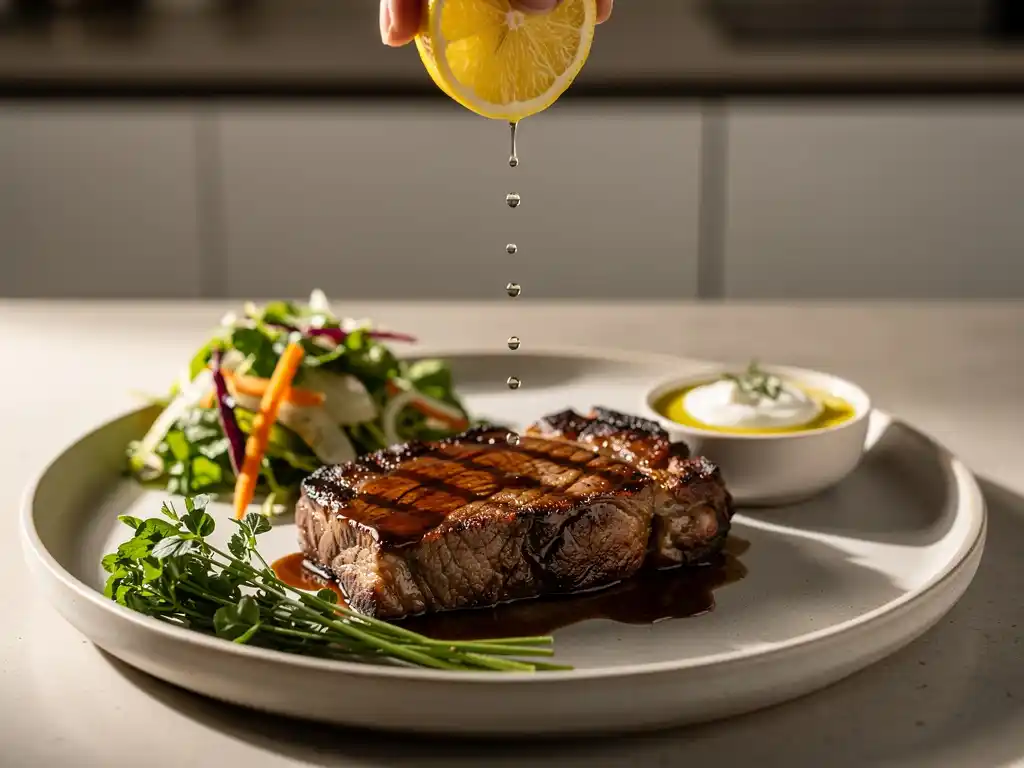
Think of a squeeze of lemon over grilled meat, a splash of vinegar stirred into a sauce, or a spoon of yoghurt next to something fried. Small moves, but they change everything. They slice through the fat and bring your palate back to life, showing how acidity cuts through richness. Each bite still feels sharp and interesting halfway through. You are not trying to make the dish sour. The goal is to lift it, to give it a bit of edge.
Beyond Acidity
That said, acidity is only part of the story. Texture plays its own game. A crispy topping on something soft, fresh herbs scattered over a slow-cooked base, even a handful of nuts thrown in at the last minute. These shifts stop the dish from feeling flat and predictable.
Temperature can do a similar job. Pair something warm and rich with something cool and fresh and you create a subtle contrast that keeps things moving. The dish feels lighter without losing its depth.
Salt matters too. It sharpens flavours and keeps fat from tasting flat. But salt on its own will not fix a heavy dish. You can season something perfectly and still feel like something is missing. More often than not, that missing piece is contrast.
Build It in Layers
What works best is building things up in layers. Start with the richness, then ask what can cut through it, what can refresh the palate, what makes you want the next bite instead of slowing down.
Sometimes the answer is obvious. Other times it is a small tweak. A quick pickle on the side, a squeeze of citrus at the end, a handful of fresh herbs just before serving. The shift can be subtle, but you feel it straight away.
The Point of Balance
When a rich dish is balanced properly, it does not weigh you down. It feels clean, complete, easy to keep eating. You still get the comfort and depth, but with enough movement to hold your attention.
That is where good cooking lives. Because the best rich dishes do not stop you after a few bites. They pull you back in again and again.
Hanan: text10 April 2026
You Might Like This
Loved this one? We picked a few more you might like.



Your voice!